Zero to 1.5M MAUs in 90 Days
Zero to 1.5M MAUs in 90 Days
Scaling Ninety Eight’s mobile gaming platform from zero to 1.5 million monthly active users in 90 days. I led growth from June 2023 through April 2025.
The Problem
Ninety Eight had a crypto finance platform (Coin98) but wanted to build a gaming ecosystem on top of it. The pitch to gaming studios was simple: bring your game to the platform and I’d bring the users. But the platform had no users. Studios weren’t going to partner with an empty platform.
I needed rapid, visible scale to close studio deals. Budget was $50K/month. Timeline was one quarter.
What I Built
The Viral Loop
The core growth engine wasn’t paid acquisition. It was a referral mechanic built into the gaming experience itself.
Players invited friends to join their teams. Team composition mattered for in-game performance, so players had a real reason to recruit. Good formations got shared on social — players compared strategies, argued about builds, posted results. Every share was organic acquisition.
The loop: Play -> Build team -> Share formation -> Friends join -> Better team -> Share again.
The viral coefficient hit 1.2x. For every 10 users who joined, they brought in 12 more. At 1.2x, growth compounds on itself — paid acquisition becomes supplementary, not primary.
The Retention System
Getting users in was one problem. Keeping them was the real one.
Day-1 activation was 42% at launch. More than half of new users churned before experiencing core value. The onboarding flow took 15 minutes — wallet setup, KYC-lite, tutorial, first game. Too many steps, too much friction.
I treated onboarding as a product, not a checklist. Ran multi-wave A/B tests on first-session flows:
- Cut wallet setup to 2 taps (Telegram login, no separate crypto wallet needed)
- Removed KYC-lite from first session entirely (moved to first withdrawal)
- Replaced the tutorial with a guided first match that taught mechanics by playing
Time-to-value dropped from 15 minutes to 3 minutes. Day-1 activation went from 42% to 60%. Retention held at 45% across the full 1.5M user base.
The Budget Machine
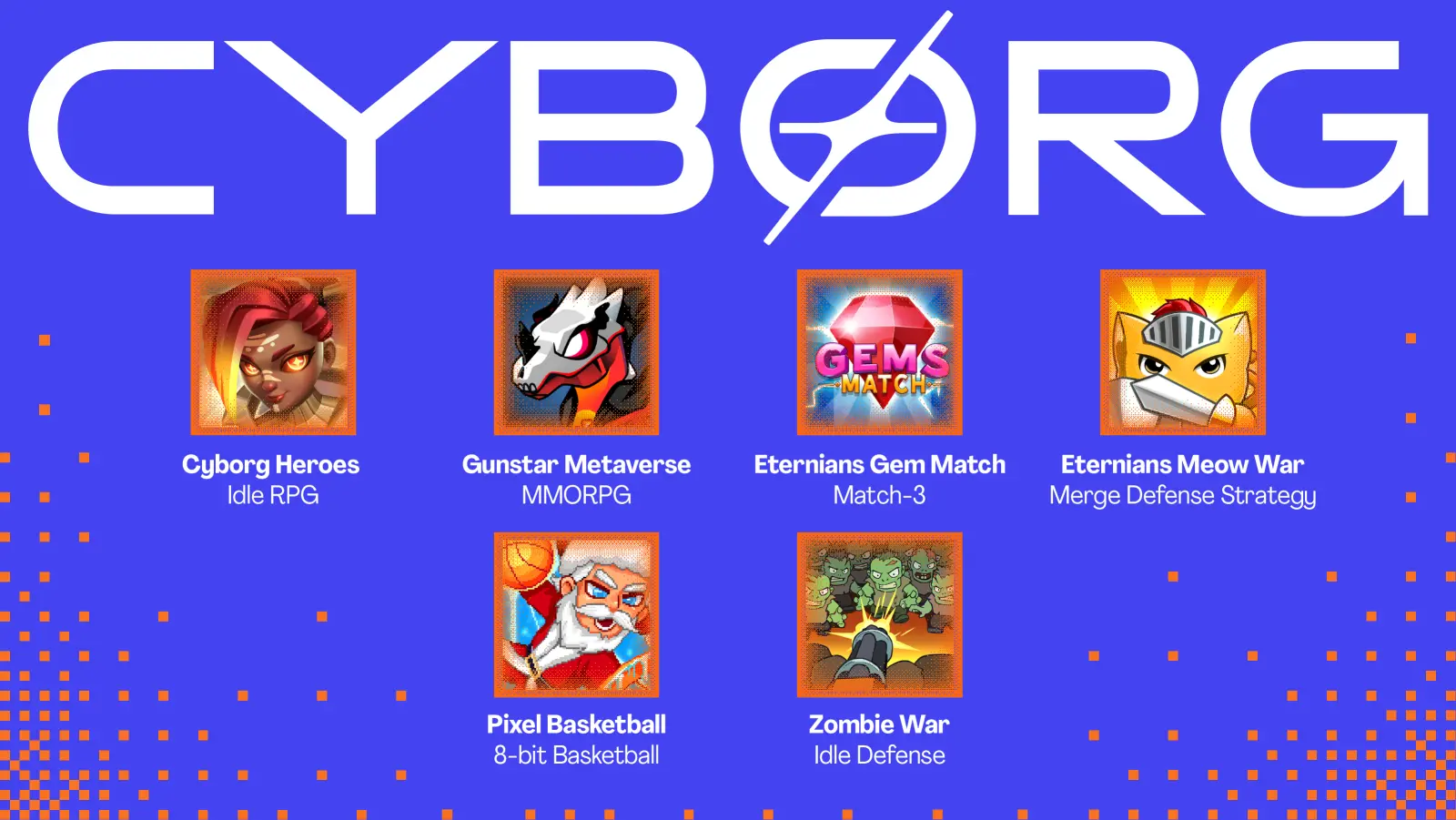
$50K/month across 10+ gaming studio partnerships. Each studio promoted their game on Cyborg; I managed the acquisition budget for the platform as a whole.
The key was systematic channel optimization. Not one big bet — constant reallocation based on weekly CPI and retention data per channel, per game, per geo. Kill underperformers fast, double down on winners.
CPI held at $0.20 or below across the entire 90-day ramp. At 1.5M MAUs, the referral loop was generating more users than paid, so the $50K/month was buying growth on top of organic, not funding it.
The Numbers
| Metric | Before | After | Timeline |
|---|---|---|---|
| MAUs | 0 | 1,500,000 | 90 days |
| Viral coefficient | — | 1.2x | Sustained |
| Day-1 activation | 42% | 60% (+18pp) | A/B tested over 6 weeks |
| Retention | — | 45% | Sustained at scale |
| Time-to-value | 15 min | 3 min | Re-engineered onboarding |
| CPI | — | $0.20 | On $50K/month budget |
| Transaction volume | baseline | +30% | Incentive campaigns |
| Studio partnerships | 0 | 10+ | Ongoing |
What I Learned
The biggest lever wasn’t paid acquisition. It was the referral mechanic. Without the viral loop, the budget would have needed to be 5x larger to hit the same number. The second biggest lever was treating onboarding as a product. The 42%->60% activation improvement meant 18% more users stuck around to refer others — which compounded through the viral loop.
Most teams treat acquisition and retention as separate problems. They’re not. At 1.2x viral coefficient, every retained user is also an acquisition channel. Fix retention first, then turn on paid.